




Alveolar Osteitis (“Dry Socket”)—A Complete 2025 Guide for Patients in Nashville, TN
1 | What Is a Dry Socket?
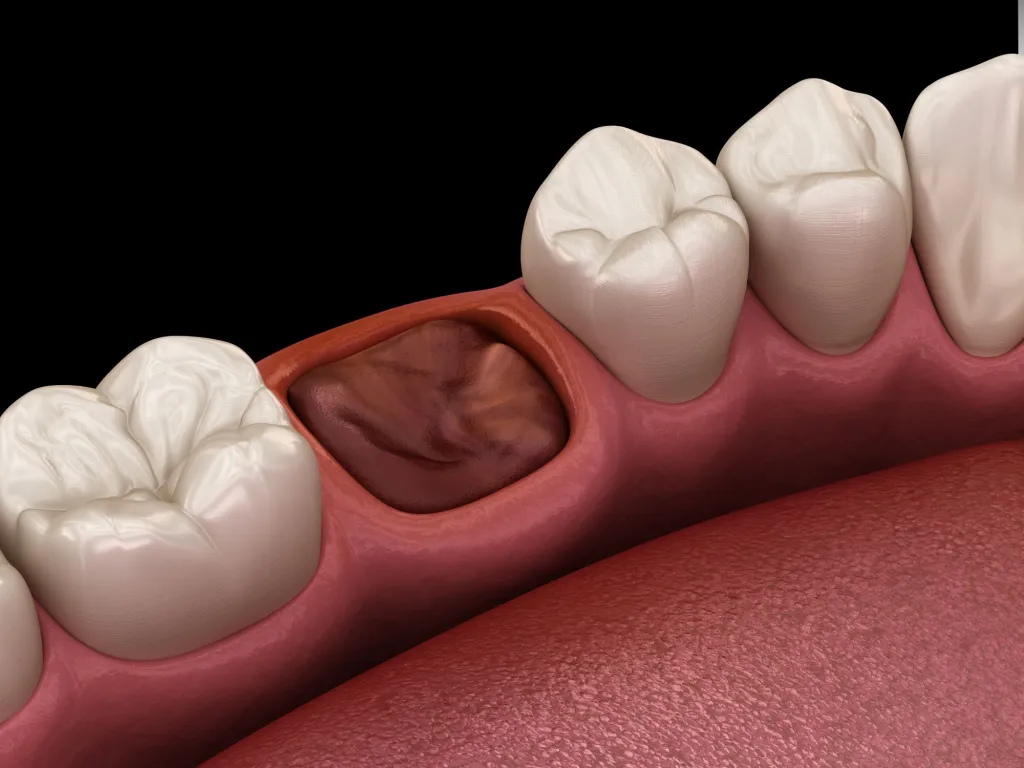
If you’ve been searching “what is a dry socket”, you are not alone. Clinically termed alveolar osteitis, a dry socket occurs on average 2–5 days after a tooth extraction when the protective blood clot dissolves or is lost. Without that clot, exposed bone and nerve endings are left exposed, causing sharp/throbbing, radiating pain, foul taste or odor, and an empty-looking socket that appears whitish instead of dark red.
Pathology studies show a localized surge of fibrinolytic enzymes and inflammatory cytokines that break down fibrin, preventing normal healing.
2 | How Common Is Dry Socket?
| Situation | Typical Incidence | Key Evidence |
|---|---|---|
| Simple, non-surgical extractions | 1–5% | 2022 Cochrane review on alveolar osteitis (high quality study) |
| Surgical/impacted lower wisdom teeth | 20–30% | 2022 Cochrane review on alveolar osteitis (high quality study) |
| Current smokers | ~13% | 2022 systemic review of incidence in dry socket between smokers and nonsmokers |
Patient takeaway: For most routine extractions the risk is <5%, but surgical wisdom-tooth patients—especially smokers—should know the odds can approach 1 in 3 without preventive steps.
3 | Top Risk Factors
- Surgical difficulty & trauma (bone removal, long operating time)
- Tobacco or vaping (decreases socket oxygen tension)
- Oral-contraceptive hormones (estrogen spikes fibrinolysis)
- Age > 30 and prior history of dry socket
- Non-compliance with post-op instructions (straws, vigorous rinsing, poor oral hygiene)
4 | Signs & Symptoms to Watch For
- Severe, throbbing pain 2–5 days post-extraction
- Pain radiating to ear, temple, or neck
- Visible, pale bone inside the socket
- Bad breath or unpleasant taste
- Minimal swelling or fever (distinguishes it from infection)
If these appear, contact our office right away for instructions and/or assessment.
5 | Evidence-Based Dry Socket Treatment Options
- Irrigation & Medicated Pastes
- Warm saline flush removes necrotic debris; adjunct pastes (chlorhexidine, doxycycline, hyaluronic acid) have mixed evidence and are case-dependent.
- Systemic Medications
- NSAIDs remain first-line; short opioid course rarely needed.
- Eugenol-Based Dressings (e.g., Sockit Gel)
- Provide immediate analgesia and mild antisepsis but results can vary.
- Antibiotics
- Only when infection is suspected (pus, increased swelling, fever/chills).
- Platelet-Rich Fibrin (PRF)
- Reduces pain within 24–48 hours and promotes complete tissue healing in 7–10 days.
- Growth factors (PDGF, VEGF, TGF-β) promote rapid healing.
- Note: 2022 Cochrane Review reports this evidence is “very low-certainty.”
- Photobiomodulation Therapy (PBMT)
- Significant pain reduction when a 660 nm diode laser is used.
- Mechanism: boosts mitochondrial ATP and accelerates epithelial migration.
- PRF + PBMT Combination
- Offers the greatest overall pain relief and fastest healing per 2024 RCT.
6 | Our Four-Step Protocol at Hermitage Oral Surgery
- Diagnosis & Imaging – Clinical exam and, if necessary, x-ray or CBCT to rule out retained root fragments.
- Gentle Socket Debridement – Remove necrotic remnants under local anesthesia.
- Custom Dressing & 48-h Review – Eugenol dressing or collagen plug based on sensitivity; most patients report ≥ 50% pain relief within 24 h.
- Autologous PRF Membrane – (Optional) Processed chair-side from your own blood for biologic healing.
7 | Prevention: How to Lower Your Risk
- Pre-op 0.12% chlorhexidine rinse (≈ 40% risk reduction)
- Avoid smoking or vaping for at least 72 hours post-extraction
- No straws, spitting, or carbonated drinks for one week
- Soft foods & head elevation the first two nights
- Gentle salt-water rinses starting 24 hours after surgery
- Stay hydrated and take prescribed anti-inflammatories as directed
These small steps dramatically reduce clot dislodgement and fibrinolysis after surgery.
8 | Frequently Asked Questions (FAQ)
- When does a dry socket usually start?
- Pain typically peaks 2–5 days after extraction, not the same day.
- How long does recovery take?
- With intervention, typically 24–48 hours.
- Is it an infection?
- Not initially, it’s an inflammatory response to clot loss. Infection can develop later but will include other symptoms like pus, swelling, or fever.
- What are possible complications?
- Rare cases may develop localized osteomyelitis or delayed bone healing, but timely care prevents long-term issues.
- What can I do at home while I wait?
- OTC NSAIDs, warm salt-water rinses, and upright head positioning aid in healing and pain relief.
Key Takeaways
- Dry socket = lost clot + exposed bone → severe pain.
- Incidence: <5% for simple extractions, ≈30% for complex/smoking patients.
- Biologic therapies (PRF) provide faster pain relief and healing.
- Early diagnosis and evidence-based care at Hermitage Oral Surgery deliver excellent results.
Comments are closed.