




Tori Removal in Nashville, TN
Tori are common bony growths in the mouth that are usually harmless — but when they interfere with your dentures, eating, speech, or oral hygiene, removal is a safe and straightforward procedure. At Hermitage Oral & Maxillofacial Surgery, Dr. Abigail Yazbak and Dr. Andrew Mills remove mandibular and palatal tori with a focus on comfort and a smooth recovery.
What Are Tori?
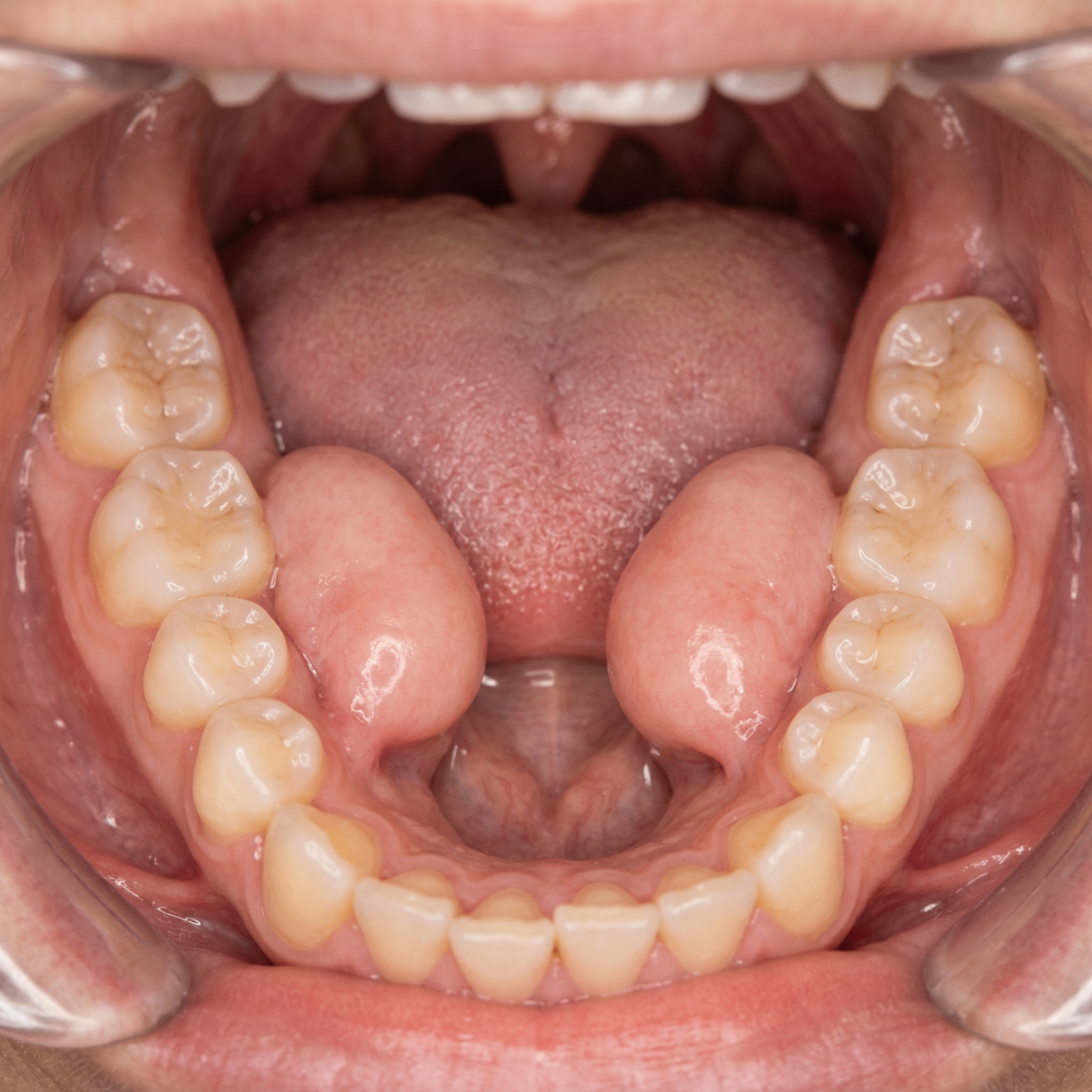
Tori (singular: torus) are benign bony growths that develop in the mouth. The two most common types are torus palatinus, which forms on the roof of the mouth, and torus mandibularis, which develops along the inner surface of the lower jaw near the tongue.
Tori are common, tend to develop gradually, and are believed to be influenced by genetics, teeth grinding (bruxism), and bite forces. They are completely benign — not cancerous or pre-cancerous. Most tori never require treatment and only become candidates for removal when they grow large enough to interfere with speech, eating, denture fit, or oral hygiene.
When Is Tori Removal Needed?
Tori can keep a denture or partial from seating properly, making a comfortable fit difficult or impossible.
Larger tori can interfere with chewing and make certain foods uncomfortable.
Tori on the palate can affect tongue placement and contribute to a lisp.
The thin tissue covering a torus is easily irritated or ulcerated by hard foods, causing recurring sore spots.
Tori can make thorough brushing and flossing difficult, raising the risk of decay and gum disease.
Tori are often removed as part of pre-prosthetic surgery before dentures or restorations are placed.
Types of Tori
Torus Palatinus
Bony growth on the roof of the mouth (hard palate). The most common type, ranging from a small bump to a larger, lobed mass covering much of the palate.
Torus Mandibularis
Bony growth along the inner surface of the lower jaw, usually on both sides near the premolars. It can appear as a single nodule or several.
Buccal Exostoses
Bony growth on the outer, cheek-side surface of the upper or lower jaw. Less common, but can still interfere with prosthetics and oral function.
What to Expect
Consultation & Evaluation
Your surgeon examines the tori, reviews your symptoms, and may use X-rays or 3D imaging to assess the extent of the growth.
The Procedure
Performed under local anesthesia, with sedation options available. A small incision is made, the excess bone is removed and smoothed, and the tissue is sutured.
Recovery
Most patients manage mild soreness with medication and return to normal activities within a few days. Soft tissue heals over roughly two to three weeks.
Follow-Up
A follow-up visit confirms healing. If you’re preparing for a denture, we verify the ridge is smooth and ready for a well-fitting prosthesis.
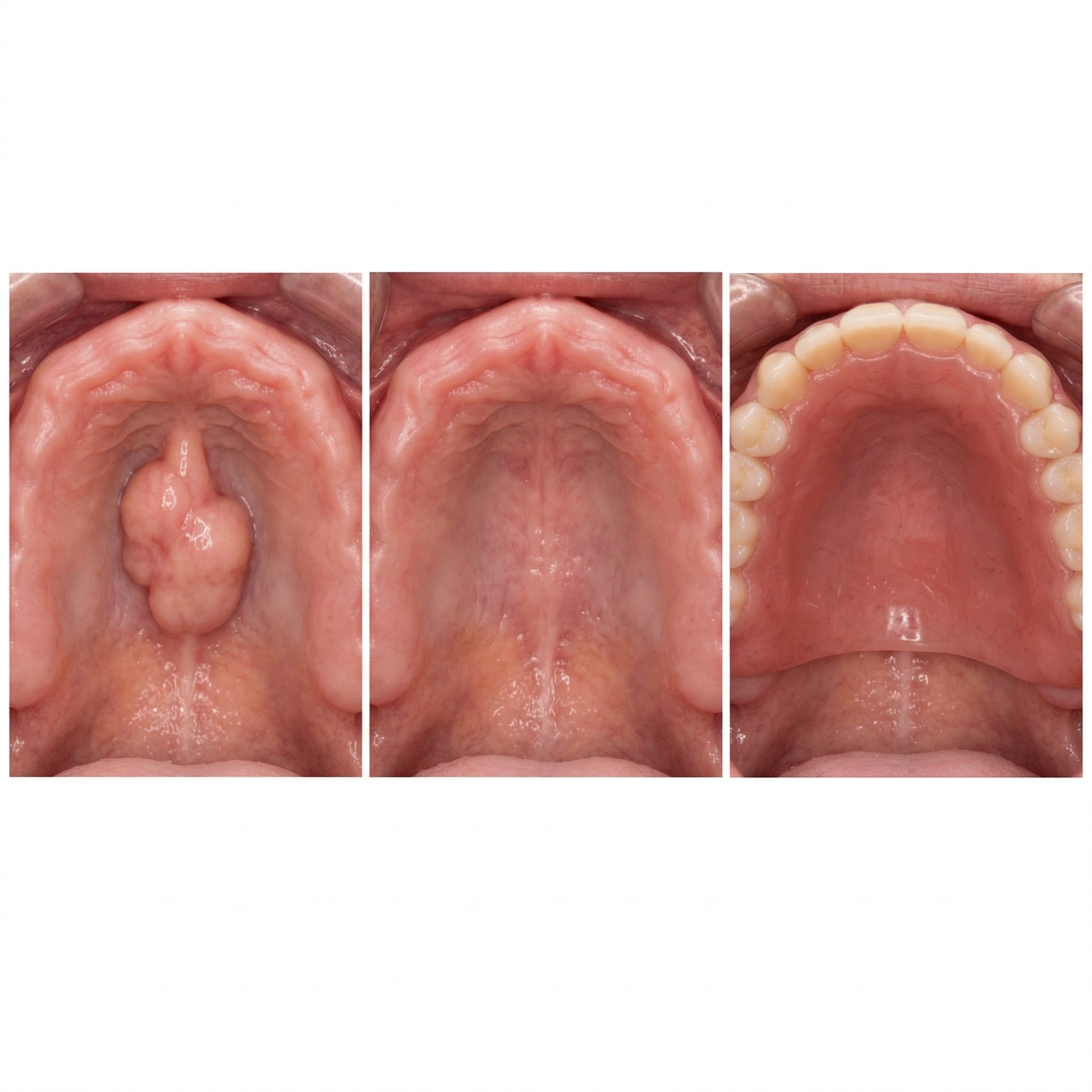
Before & After: Palatal Tori Removal
Life After Tori Removal
Most patients are pleasantly surprised by how much more comfortable their mouth feels. Everyday activities — eating, speaking, and wearing dentures — become noticeably easier once the growths are gone. The tissue heals well, tori rarely recur once removed, and for patients planning dentures, removal creates the smooth, even bone surface needed for a stable, comfortable fit.
Schedule Your Tori Removal Consultation
Find out whether tori removal is right for you with Dr. Yazbak and Dr. Mills.
Prefer to call? Reach us at Hermitage Oral & Maxillofacial Surgery Phone Number (615) 883-0067.
Frequently Asked Questions
Are tori dangerous?
No — tori are benign bony growths and are not cancerous or pre-cancerous. They form slowly over time and are usually harmless. Removal is only recommended when a torus interferes with function, denture fit, or oral hygiene.
Is tori removal painful?
The procedure is performed under local anesthesia, so you shouldn’t feel pain during treatment. Afterward, most patients manage mild to moderate soreness with medication for a few days.
How long does recovery take?
Most patients return to normal activities within a few days, with the soft tissue fully healing over about two to three weeks. You’ll start on a soft diet and receive care instructions to protect the site while it heals.
Can tori grow back after removal?
Tori rarely return once removed. Because they’re linked to factors like genetics and bite forces rather than active disease, recurrence is uncommon and most patients enjoy lasting relief.
Will I need stitches?
Yes, dissolvable sutures are typically placed to close the tissue over the treated bone. They usually dissolve on their own within one to two weeks, so a separate removal visit generally isn’t needed.
How do I know if my tori need to be removed?
Tori usually only need removal when they cause a problem — interfering with a denture, making eating or speaking difficult, getting repeatedly irritated, or complicating oral hygiene. Dr. Yazbak or Dr. Mills can evaluate your tori and let you know whether removal is recommended.
Does insurance cover tori removal?
Coverage depends on your plan and whether the procedure is considered medically necessary. Our team can review your benefits with you before treatment.